Title: Rebuilding NeXTSTEP
Post by: brunocampos on May 16, 2023, 09:44:11 AM
Post by: brunocampos on May 16, 2023, 09:44:11 AM
Hello all!
Since January this year, I've been sharing a few thoughts to forum members and received a few tips about a few ideas.
What has been on my mind lately is quite odd, but I've been attracted to the idea of rebuilding NeXTSTEP in a new hardware and software context.
A brand new operating system that would rescue many foundations that Steve Jobs had when he launched NeXT targeting universities and research departments. I believe that NeXT's initiatives like the Education CD-ROM (software samples) were in line to NeXT's principles, but they couldn't advance due to the company's short life.
I believe a project in this order of magnitude requires venture capital investment as well as a target market. I've been reading about GNUstep and, from what I learned, it hasn't met expectations because of its lack of commercial objectives (I believe GNUstep is great work though, but it will never have a market impact like NeXT back in the day).
In summary, I'm open to learning more about your thoughts, critics and advice. This is an odd project but it has good intentions.
Thank you,
Bruno Campos
Since January this year, I've been sharing a few thoughts to forum members and received a few tips about a few ideas.
What has been on my mind lately is quite odd, but I've been attracted to the idea of rebuilding NeXTSTEP in a new hardware and software context.
A brand new operating system that would rescue many foundations that Steve Jobs had when he launched NeXT targeting universities and research departments. I believe that NeXT's initiatives like the Education CD-ROM (software samples) were in line to NeXT's principles, but they couldn't advance due to the company's short life.
I believe a project in this order of magnitude requires venture capital investment as well as a target market. I've been reading about GNUstep and, from what I learned, it hasn't met expectations because of its lack of commercial objectives (I believe GNUstep is great work though, but it will never have a market impact like NeXT back in the day).
In summary, I'm open to learning more about your thoughts, critics and advice. This is an odd project but it has good intentions.
Thank you,
Bruno Campos
Title: Re: Rebuilding NeXTSTEP
Post by: gtnicol on May 16, 2023, 10:16:53 AM
Post by: gtnicol on May 16, 2023, 10:16:53 AM
I was talking to someone recently about this. GNUstep never really delivered because it wasn't as integrated an experience. The original system was remarkably small in terms of code base. considering the functionality.
I think it'd be interesting to port XNU to something like RISC-V, then to layer on DPS etc. to get close to the core of the initial NeXTSTEP. Previous could be used almost like Rosetta for running legacy apps.
I think it'd be interesting to port XNU to something like RISC-V, then to layer on DPS etc. to get close to the core of the initial NeXTSTEP. Previous could be used almost like Rosetta for running legacy apps.
Title: Re: Rebuilding NeXTSTEP
Post by: pTeK on May 16, 2023, 09:06:32 PM
Post by: pTeK on May 16, 2023, 09:06:32 PM
Sounds great if you can get NeXTSTEP compiled up and running to Raspberry Pi would be great :).
I know there have been some more leaked sources of some of the development tools. But would you build on NetBSD or Linux ?
I guess the main update would be multicore support and ipv6?
I know there have been some more leaked sources of some of the development tools. But would you build on NetBSD or Linux ?
I guess the main update would be multicore support and ipv6?
Title: Re: Rebuilding NeXTSTEP
Post by: wizard on May 17, 2023, 12:06:28 AM
Post by: wizard on May 17, 2023, 12:06:28 AM
I thought this is already done with MacOS.
Title: Re: Rebuilding NeXTSTEP
Post by: brunocampos on May 17, 2023, 05:36:07 AM
Post by: brunocampos on May 17, 2023, 05:36:07 AM
I believe the operating system could be rewritten into a modern context. UNIX-derived BSD. An alternative to macOS, Linux and Windows.
I believe it could contain the best available networking technology and a smarter way of building custom apps, like a "no-code" platform.
Odd. Ambitious. And help is needed - I'm just getting started.
I believe it could contain the best available networking technology and a smarter way of building custom apps, like a "no-code" platform.
Odd. Ambitious. And help is needed - I'm just getting started.
Title: Re: Rebuilding NeXTSTEP
Post by: gtnicol on May 17, 2023, 08:48:38 AM
Post by: gtnicol on May 17, 2023, 08:48:38 AM
The core operating system is open source - XNU kernel. That's the same kernel that's in iOS, MacOS etc. and is still largely the same. A lot of the user-space utilities are all open source as well... so getting to a functional command line shouldn't be too hard. The real trick is in the GUI/windowing system. I personally think it'd be great to see DPS come back in some form... and the interpreter for that is remarkably small in NeXT boxes.
Title: Re: Rebuilding NeXTSTEP
Post by: wizard on May 18, 2023, 04:49:07 AM
Post by: wizard on May 18, 2023, 04:49:07 AM
Quote from: gtnicol on May 17, 2023, 08:48:38 AMThe core operating system is open source - XNU kernel. That's the same kernel that's in iOS, MacOS etc. and is still largely the same. A lot of the user-space utilities are all open source as well... so getting to a functional command line shouldn't be too hard. The real trick is in the GUI/windowing system. I personally think it'd be great to see DPS come back in some form... and the interpreter for that is remarkably small in NeXT boxes.
I think DPS is owned by Adobe and would have to be licensed. I read once that is why Apple switched to Core Graphics or whatever they call it.
Title: Re: Rebuilding NeXTSTEP
Post by: eagle on May 18, 2023, 08:02:09 AM
Post by: eagle on May 18, 2023, 08:02:09 AM
Quote from: wizard on May 17, 2023, 12:06:28 AMI thought this is already done with MacOS.Right, isn't that basically what macOS is? I mean, Rhapsody DR1 was essentially nothing more than NeXTSTEP/OPENSTEP ported to PPC with a few nods to MacOS 8; later Mac OS X (now macOS) was just the continuation of the x86 port (now x86_64 and ARM).
But maybe @brunocampos is wanting to get back to the original UI, which GNUstep copied. It was easy to see the NeXT lineage in the Mac OS X 10.1 days, but it's quite a lot harder today on Big Sur/Monterey/Ventura.
Title: Re: Rebuilding NeXTSTEP
Post by: jtayler on May 18, 2023, 12:42:51 PM
Post by: jtayler on May 18, 2023, 12:42:51 PM
A truly modern OS really IS Darwin as Apple's open source underlying MacOS, that's where NeXTSTEP microkernel now lives -- also, the OS can be hosted via Previous emulation and this runs NS 3.3 quite well but of course, this is a non-modern OS with security problems, memory leaks and no modern tools. Each of these things has value as we move ahead in time, this history is critical. I would remind folks that the earliest web had no back-button, no URL bar and no bookmarks. https://appstorey.com/2016/04/06/the-earliest-web-the-story-of-spiderwoman/ so, we still invent the future! let's not forget History's Greatest Computer because MOST PEOPLE HAVE NO IDEA it is the computer that invented the legs upon which today's mobile computing world stands --
Title: Re: Rebuilding NeXTSTEP
Post by: brunocampos on May 18, 2023, 09:27:16 PM
Post by: brunocampos on May 18, 2023, 09:27:16 PM
Quote from: eagle on May 18, 2023, 08:02:09 AMRight, isn't that basically what macOS is? I mean, Rhapsody DR1 was essentially nothing more than NeXTSTEP/OPENSTEP ported to PPC with a few nods to MacOS 8; later Mac OS X (now macOS) was just the continuation of the x86 port (now x86_64 and ARM).
But maybe @brunocampos is wanting to get back to the original UI, which GNUstep copied. It was easy to see the NeXT lineage in the Mac OS X 10.1 days, but it's quite a lot harder today on Big Sur/Monterey/Ventura.
The original UI sure looks good, but the main goal is to bring back the effect that NeXT caused back on its day.
I've been reading the book "Steve Jobs and the NeXT Big Thing" (I know the critics, but I think it's an important document about NeXT's history) and I understood that it had the power to create a community of developers willing to create applications for NeXT.
This "rebirth" of NeXTSTEP could offer features that would cause the same impact today as NeXT caused back in the day. An operating system that fills the gaps that macOS and Windows have, plus an easier way to create applications.
This may seem counterintuitive to do in the era of web development and mobile apps, but it could be a thing.
As @jtayler pointed out: "we still invent the future" and "most people have no idea [NeXT] is the computer that invented the legs upon which today's mobile computing world stands".
Please, send me any information to help achieve this operating system's first version.
Title: Re: Rebuilding NeXTSTEP
Post by: wizard on May 19, 2023, 12:34:13 PM
Post by: wizard on May 19, 2023, 12:34:13 PM
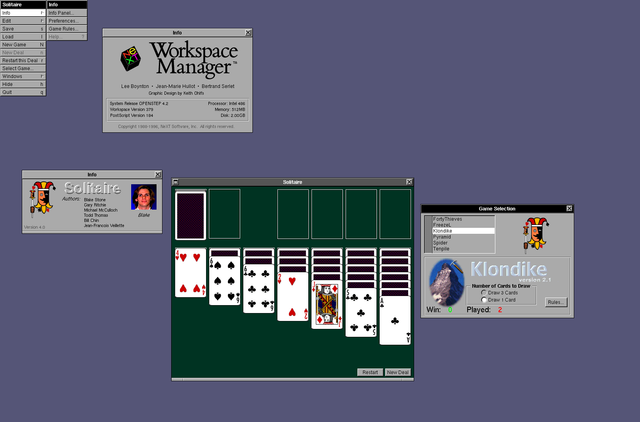
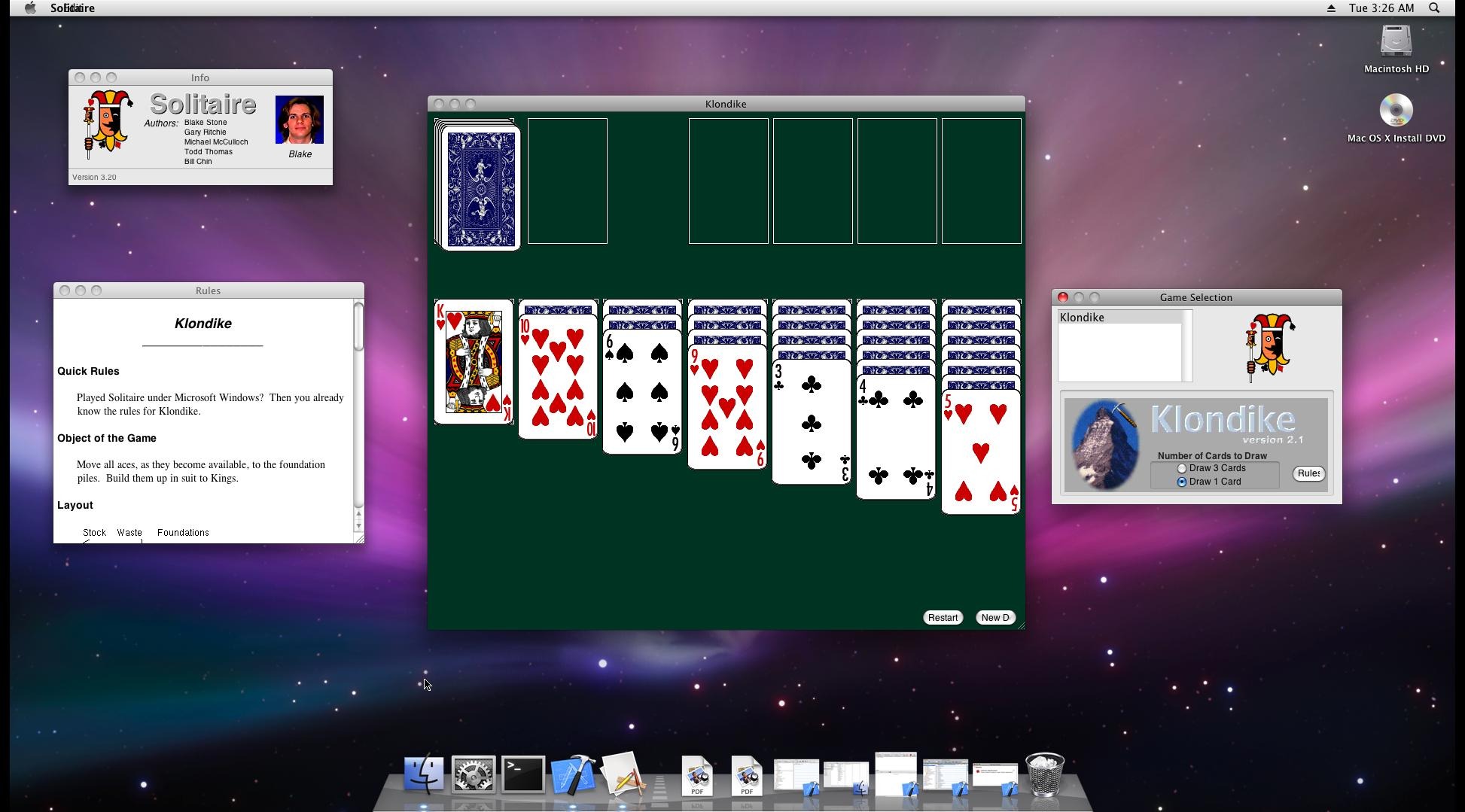
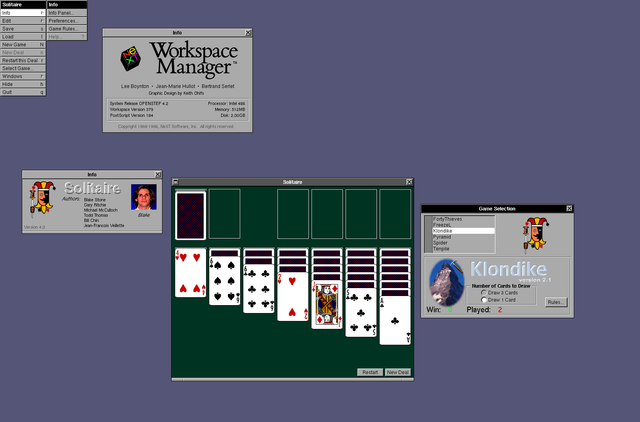
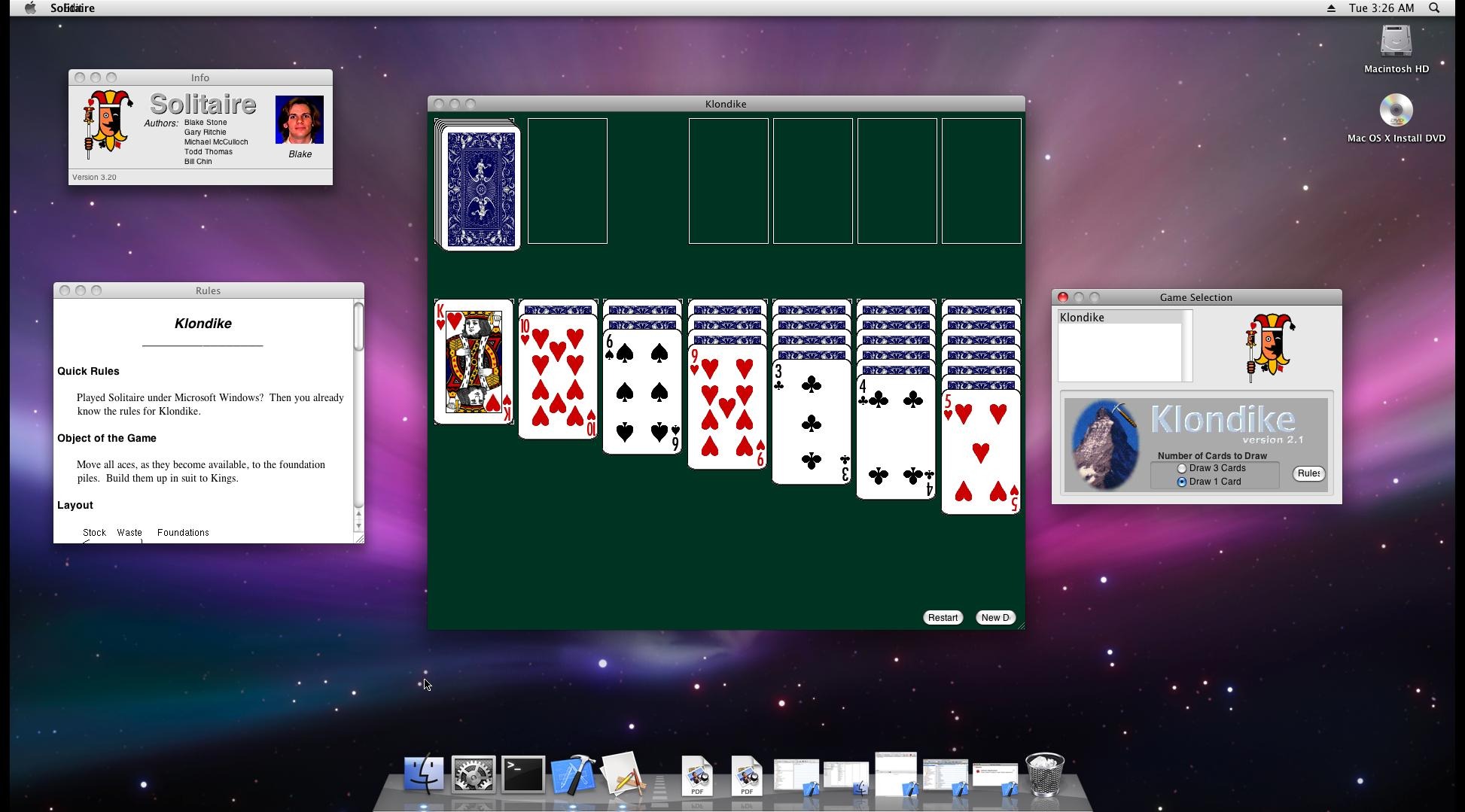
You are talking about doing what MacOs already does.
Title: Re: Rebuilding NeXTSTEP
Post by: gtnicol on May 20, 2023, 06:56:05 PM
Post by: gtnicol on May 20, 2023, 06:56:05 PM
Quote from: wizard on May 18, 2023, 04:49:07 AMI think DPS is owned by Adobe and would have to be licensed. I read once that is why Apple switched to Core Graphics or whatever they call it.
I'm not sure about that... Ghostscript implements some fair portion of DPS.
Title: Re: Rebuilding NeXTSTEP
Post by: wizard on May 21, 2023, 12:34:39 AM
Post by: wizard on May 21, 2023, 12:34:39 AM
Quote from: gtnicol on May 20, 2023, 06:56:05 PMI'm not sure about that... Ghostscript implements some fair portion of DPS.
I'm not sure either, I read it on Wikipedia but I do remember it in the press 20 years ago.
Was there an interepreter for DPS that could be called from the command line in NEXTSTEP or OPENSTEP?
I know the app "Scene" would do it, but I mean just something you could launch from the command line and run a dps script from? After reading your post I did try running some old NeXT demo scripts through a reasonably current version of Ghostscript and I got lots of syntax errors and could not get them to run.
But, I am not familiar enough with DPS or how much Ghostscript interprets yet to try and port them.
I am able to view regular eps images.
Title: Re: Rebuilding NeXTSTEP
Post by: cuby on May 21, 2023, 03:15:44 AM
Post by: cuby on May 21, 2023, 03:15:44 AM
Quote from: wizard on May 21, 2023, 12:34:39 AMI'm not sure either, I read it on Wikipedia but I do remember it in the press 20 years ago.I think there are two sides to this - licensing fees NeXT had to pay for using Adobe's Postscript code and probably licensing fees for Adobe's patents on Postscript (which should be expired now).
QuoteWas there an interepreter for DPS that could be called from the command line in NEXTSTEP or OPENSTEP?"yap" (Yet another Previewer) (https://en.wikipedia.org/wiki/Yet_Another_Previewer) was bundled with NeXTstep demos. I'm not sure if yap could handle dps in addition to "regular" ps/eps files.
Title: Re: Rebuilding NeXTSTEP
Post by: Daxziz on May 21, 2023, 04:00:29 AM
Post by: Daxziz on May 21, 2023, 04:00:29 AM
Would it be easier to start based on Darwin and GNUstep as the foundation and build your ideology from there?
Something like this should be fairly possible: https://www.youtube.com/watch?v=oxfPacMI6-8
Something like this should be fairly possible: https://www.youtube.com/watch?v=oxfPacMI6-8
Title: Re: Rebuilding NeXTSTEP
Post by: wizard on May 21, 2023, 05:13:23 PM
Post by: wizard on May 21, 2023, 05:13:23 PM
Quote from: cuby on May 21, 2023, 03:15:44 AMI think there are two sides to this - licensing fees NeXT had to pay for using Adobe's Postscript code and probably licensing fees for Adobe's patents on Postscript (which should be expired now).
"yap" (Yet another Previewer) (https://en.wikipedia.org/wiki/Yet_Another_Previewer) was bundled with NeXTstep demos. I'm not sure if yap could handle dps in addition to "regular" ps/eps files.
Interesting , I found the source code to Yap on my VirtualBox VM of OPENSTEP 4.2, the Controller.m has a last entry of January 1996 "for 4.0" note. I tried to compile it, but just get Undefined symbols and Link errors. That's all it says. I will dig further.
Title: Re: Rebuilding NeXTSTEP
Post by: nuss on May 22, 2023, 09:45:11 AM
Post by: nuss on May 22, 2023, 09:45:11 AM
Hi @wizard , not sure about the error, just wanted to mention that some other DPS / PS / YAP projects exist, that might be of interest for information or better compilation:
- http://www.nextcomputers.org/NeXTfiles/Software/NEXTSTEP/Apps/Graphics/Postscript/EnhancedYap.NIHS.bs.tar.gz
- http://www.nextcomputers.org/NeXTfiles/Software/NEXTSTEP/Apps/Graphics/Postscript/BeYap.1.21b.NI.b.tar.gz (by PStill's Frank Siegert), no sources
- https://github.com/johnsonjh/NeXTDPS
- http://www.nextcomputers.org/NeXTfiles/Software/NEXTSTEP/Apps/Graphics/Postscript/EnhancedYap.NIHS.bs.tar.gz
- http://www.nextcomputers.org/NeXTfiles/Software/NEXTSTEP/Apps/Graphics/Postscript/BeYap.1.21b.NI.b.tar.gz (by PStill's Frank Siegert), no sources
- https://github.com/johnsonjh/NeXTDPS
Title: Re: Rebuilding NeXTSTEP
Post by: wizard on May 22, 2023, 11:14:59 AM
Post by: wizard on May 22, 2023, 11:14:59 AM
Quote from: nuss on May 22, 2023, 09:45:11 AMHi @wizard , not sure about the error, just wanted to mention that some other DPS / PS / YAP projects exist, that might be of interest for information or better compilation:
- http://www.nextcomputers.org/NeXTfiles/Software/NEXTSTEP/Apps/Graphics/Postscript/EnhancedYap.NIHS.bs.tar.gz
- http://www.nextcomputers.org/NeXTfiles/Software/NEXTSTEP/Apps/Graphics/Postscript/BeYap.1.21b.NI.b.tar.gz (by PStill's Frank Siegert), no sources
- https://github.com/johnsonjh/NeXTDPS
Awesome links, thanks!
Title: Re: Rebuilding NeXTSTEP
Post by: gtnicol on June 24, 2023, 06:50:17 PM
Post by: gtnicol on June 24, 2023, 06:50:17 PM
Has anyone tried recompiling XNU recently? That might be a starting point - wondering if maybe the right thing to do would be to target x86 as an initial focus, then port to risc-v? It should be pretty easy to get DPS running against a PC.